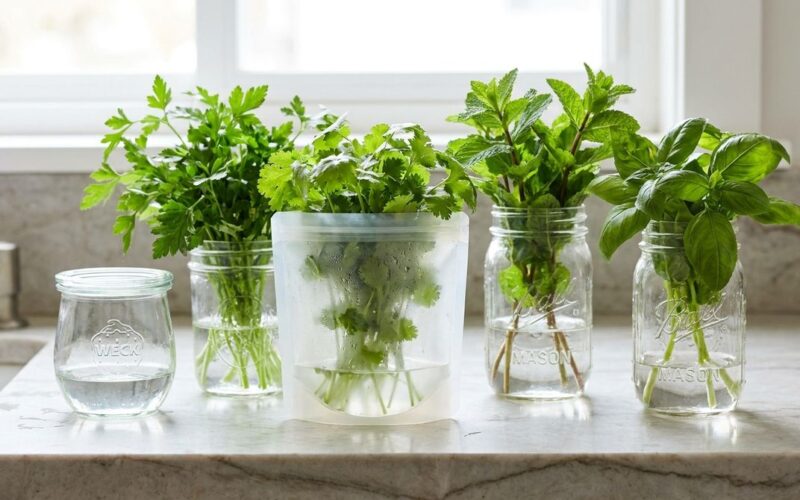
Storing Fresh Herbs in Water at a Restaurant Prep Station
Chefs often leave bunches of herbs in a jar of water on the prep station, which keeps the leaves crisp through a long service if the setup is right. A poor setup does the opposite. Leaves turn limp, stems rot, and the kitchen loses a useful garnish within a day.
This guide covers container choice, trimming habits, water changes and labeling, and simple rotation through the week. It is written for a small kitchen, though the same ideas work at home.
Choosing Water Containers and Covers
Use a clean glass jar or a tall container that holds the stems upright without crowding the leaves. The water should cover the lower stems but not reach the foliage. A loose cover made from plastic wrap keeps dust off without trapping heat.
Readers may also want to visit antechauto.com. Keep the container in the refrigerator when the station is not in use, and avoid placing it near strong smelling foods. Mint and parsley handle this method well, while more delicate herbs may need a quicker turnover.
Choose containers that are easy to wash. Narrow necks are hard to clean, so a wide jar is a safer everyday choice for a busy prep area.
Trimming Stems Before Each Shift
Cut a thin slice from the bottom of each stem before it goes into the water. A fresh cut helps the stem drink more easily, and it removes the slimy part that can block the flow. Remove any leaves that sit under the waterline, since they will rot quickly.
You can also visit carinsurancequotenw.info for more reading. Pick off bruised or yellow leaves as you work, and keep the good ones on a dry towel until needed. Wash the bunch gently in cold water and shake off the excess before it goes into the jar.
Use the trimmings for stock or a salad dressing where possible. A little planning reduces waste and keeps the station tidy.
Changing Water and Keeping Labels Clear
For a related read on this site, see Repairing a Zipper on a Favorite Rain Jacket. Rinse the container with clean water before refilling it so that residue does not build up. A quick change keeps the leaves fresh and the smell neutral.
Label each container with the herb name, the date it was prepared, and the initials of the person who filled it. Clear labels prevent a jar from being used past its useful life, and they help staff know when to discard it. Keep labels in the same place every time so no one has to hunt for information.
Set a daily check at the start of service. Smell each jar, look for slime or browning, and remove any batch that seems off. A short check protects the dish and the diners.
Rotating Bunches Through the Week
Plan the weekly order so that the oldest bunch is used first. A simple rotation board with the days of the week shows which herbs need replacing and when. Move fresh stock to the back of the cooler and bring older bunches forward.
Buy herbs in smaller amounts when the menu changes often. A large bunch that goes unused will fade before the next delivery arrives. Ask the supplier for a delivery schedule that matches the rota.
Share the rotation board with every cook on the team. A clear visual helps newcomers learn the routine quickly and keeps the station consistent across shifts.
Think about how each herb reaches the station in the first place. Delivery crates that arrive wet or crushed shorten shelf life before the first trim. Check the crates on arrival and set aside any bunch that looks damaged. Ask the supplier to pack bunches loosely and to deliver on a predictable schedule, so the water routine can start on a fresh footing.
Some kitchens use a small notebook beside the prep station to record which herbs were popular during each service. The notes show what the menu asks for most and help the cooks plan orders with less waste. A quick line per shift is enough for a useful record. Review the notes every week with the head chef. Fresh stock is the foundation of the whole routine.
Keep a spare jar and a spare cloth in a clean drawer so that a container can be swapped out without delay. A broken or cracked jar should leave the station at once, since it is hard to clean and can trap residue. Replace the cloth daily.
Ending Each Service Tidy
Wipe the station, empty the trimmings bin, and check that each jar is labeled before the lights go off. A tidy close makes the next morning start calmly and keeps the herbs ready for the first order.