How to Host a Wine Tasting at Home Without Turning It Into a Lecture
You don’t need a sommelier pin or a cellar to run a good wine tasting in your living room. You need a theme, a handful of bottles, enough glasses and a plan for the pour. Get those four right and your guests will spend the night talking about the wine instead of waiting for it.
Pick one idea and build around it
A tasting works best when the bottles have something in common. Choose one grape from several regions, such as Pinot Noir from Oregon, Burgundy and New Zealand. Or keep the region fixed and change the grape. If you can find them, line up the same wine from two or three vintages. A single thread gives guests something to compare, and comparison is what makes a tasting more fun than a regular dinner party.
Four to six wines is plenty for a group of eight to ten people. Go past that and palates tire, notes get sloppy, and the last bottles never get a fair hearing.
Work out the pour before anyone arrives
A standard 750 ml bottle holds about 25 ounces. At tasting pours of about two ounces, one bottle covers twelve people. Write that math down, set out a small measure or mark one glass, and you won’t run dry on bottle three.
Serve in this order: sparkling first, then light whites, fuller whites, rosé, light reds, bigger reds and sweet wines last. Moving from light to heavy keeps the delicate wines from tasting thin next to a big Cabernet.
Decide which bottles need help
Some wines will show better with a little air and some need nothing. Open each bottle 30 minutes early and pour yourself a small taste. A young, firm red that tastes tight may open up after time in a decanter or a pass through a pour-through aerator. An older bottle with sediment needs a slow, careful decant so the deposit stays behind. Most fresh whites and rosés are ready as soon as they are cold.
If you’re unsure which tool fits which bottle, this practical breakdown of wine serving accessories walks through aerators, decanters and openers for older corks, and it lays out a chart matching each tool to the wine and the occasion. Read it before you start pulling gadgets out of the cupboard, because it also tells you when to skip them.
Set the table for tasting, not for show
Give every guest one glass per wine if you have them, or one good all-purpose glass plus a water pitcher for rinsing. Put out a dump bucket, plain crackers or bread, and a sheet of paper with each wine numbered. White tablecloths or napkins help people judge color.
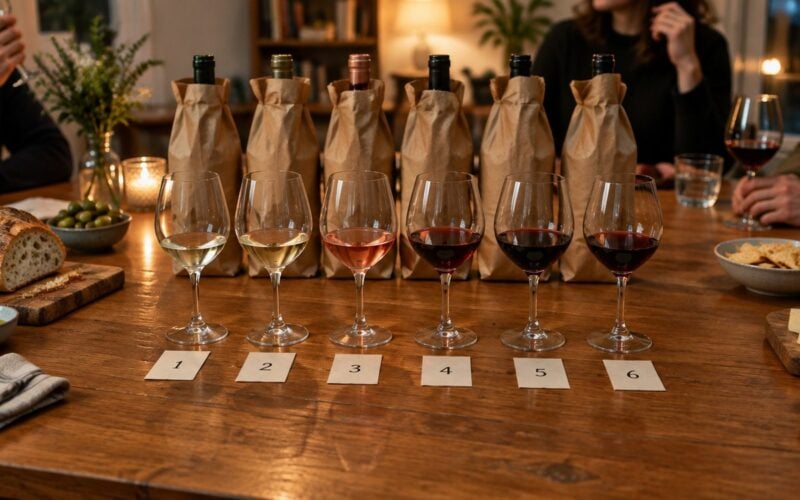
Cover the labels with paper bags or foil if you want to taste blind. Guests stop guessing at prices and start describing what they smell and taste, and you get better conversation and a few surprises.
Keep the talk short
Introduce each wine in two or three sentences: where it comes from, what grape, and one thing to notice. Then let people talk. Ask easy questions. Which one would you buy again? Which one would you serve with dinner tomorrow? You will learn more about your friends’ taste from those answers than from any formal score sheet.
Plan the food for after
Serve the meal once the tasting ends, not during, so strong flavors don’t throw off anyone’s palate. A cheese board, roasted vegetables or a bowl of pasta works well, and the open bottles become dinner wine.
Clean up the easy way
Rinse decanters and aerators with warm water as soon as the guests leave. Dried wine is harder to shift, and soap residue can taint the next bottle. Recork leftover wine, store it in the fridge and drink it within a few days.
A home tasting is one of the easiest parties to host well. Pick a theme, do the math on the pours, give each bottle the treatment it needs, and let your guests do the rest.