How to Keep a Winter Pantry Stocked When the Nearest Store Is Far Away
Living in a rural area or small town changes how you think about food. The grocery store may be a long drive away, and during heavy snow or icy roads that drive can feel even longer. Many people who live this way learn to keep a pantry that can carry the household through a rough stretch without a trip into town. This article explains how to plan that pantry, which items to buy first, how to store them well, and which mistakes to avoid. It is general information, so adjust every step to your own household, diet, and local conditions.
Start with a realistic plan
Begin by writing down what your household actually eats in an ordinary week. Look at breakfasts, lunches, and dinners, plus snacks and any food for pets or animals on the property. A pantry built from a generic list often goes unused, while one built from your real habits gets eaten and replaced in a natural rhythm. Think about how many people you cook for, whether anyone has allergies or special diets, and how often weather or road work has delayed your trips in past winters.
Once you have that picture, decide how long you want the reserve to last. Many households aim to cover a bad storm plus the time it takes for roads to be cleared, but the right length depends on where you live. Readers may also want to visit Pudding Media. Use that local guidance rather than a national average, because conditions in a mountain valley differ from those on open plains.
Choose shelf-stable staples
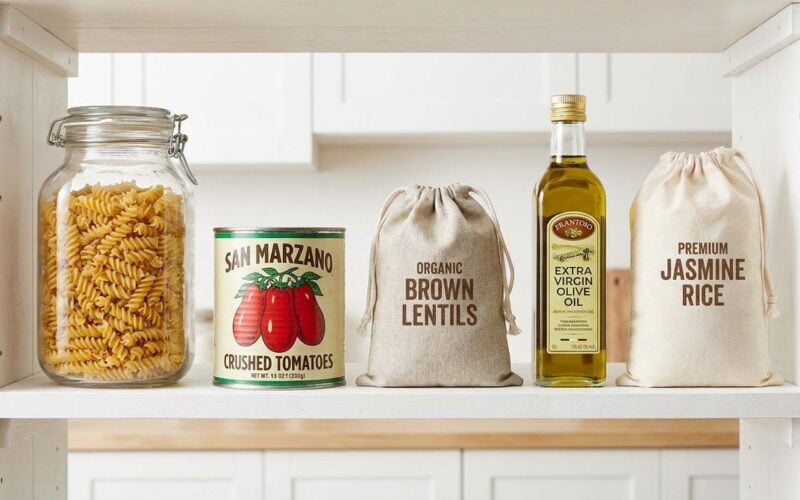
Shelf-stable staples do most of the work. Dry goods such as grains, dried beans, rolled oats, and pasta keep well in a cool, dry place. Canned vegetables, fruit, fish, and meat can carry a meal when fresh food runs short. Shelf-stable milk, cooking oil, salt, sugar, spices, and basic baking supplies make it possible to cook from scratch with what you have on hand. A simple core list might include:
- Dry beans, lentils, and rolled oats
- Canned tomatoes, vegetables, and fish
- Rice, pasta, and flour in sealed containers
- Shelf-stable milk and powdered eggs
- Cooking oil, salt, and a small set of spices
- Nut butter, crackers, and dried fruit for quick snacks
A list like this is a starting point, not a cart to fill in one trip. Add a few items each time you shop so the cost is spread out and nothing sits unused past its best date.
Store food so it stays safe
Storage matters as much as selection. Keep dry goods in airtight containers that protect them from moisture, pests, and temperature swings. Label each container with the date you bought it and move older items to the front so they get used first. Keep cans off damp concrete floors, and check them for bulging lids, deep dents, or leaks before you open them. Discard anything that looks, smells, or tastes wrong. If you are unsure about a product, the manufacturer’s storage advice or a county extension agent is a better guide than guesswork.
Plan for heat, cold, and pests
Rural homes often keep food in outbuildings, sheds, or basements that get very cold or very warm. Freezing can damage some cans and jars, and heat can shorten the life of oils, nuts, and flour. Mice and other pests are a common concern in pantry areas on country property. Use sealed containers made of metal or thick plastic, and keep the pantry away from furnace rooms and other heat sources. Many households also keep a few sealed containers of water in a dry, shaded spot. You can also visit motherabroad.com for more reading.
Cook without power
A pantry is only useful if you can cook from it. Think about how you will heat food if the stove is electric and the power goes out. A camp stove or small burner is one option, but it must be used outdoors in a well-ventilated area, and fuel heaters or grills must never run indoors. Choose foods that need little cooking, such as oats that soak overnight, bean salads, and canned meals you can eat cold when needed. Practice one simple no-power meal before you need it so the steps feel familiar. For a related read on this site, see Writing a Helpful Hours-and-Holidays Notice for a Corner.
A well-stocked winter pantry is less about buying more and more about buying wisely. Start with the foods your household already eats, protect them from heat and pests, and build a few meals you can make without power. Revisit the list each season, because a pantry that fits your life will change as your household does. If anyone has a medical condition or a special diet, speak with a healthcare professional, since general guidance cannot account for individual needs.