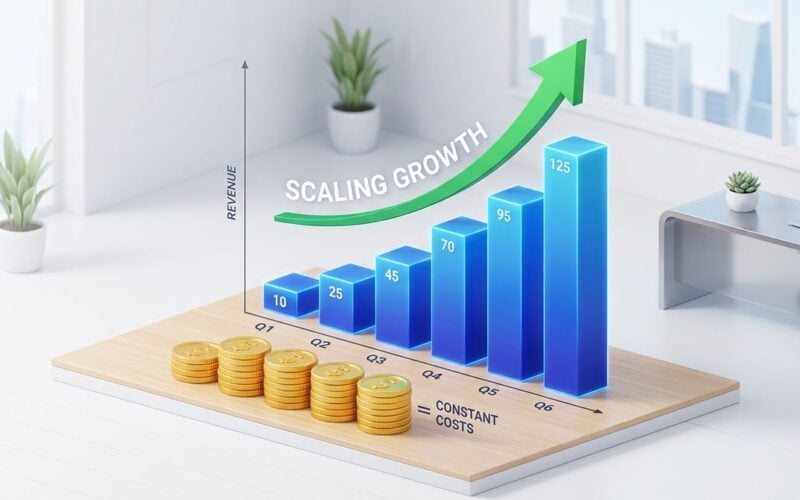
Bridging the Gap Between Talent Acquisition and Business Scaling
Scaling a business requires more than just capital and a solid product offering. It demands a harmonious alignment between the operational structure and the human talent driving that growth. Many entrepreneurs focus heavily on the mechanics of scaling—such as optimizing supply chains or enhancing digital presence—while inadvertently neglecting the recruitment and retention strategies that are necessary to sustain such expansion. When these two pillars, organizational structure and talent acquisition, fail to synchronize, the resulting friction often leads to stalled momentum and cultural fragmentation.
To successfully scale, leadership must recognize that hiring is not merely a reactive measure to fill vacancies. Instead, it should be an integrated component of the overall business development strategy. This requires a shift in mindset: seeing every new role as a building block for the company’s future capabilities rather than a simple replacement for departing staff. By treating recruitment with the same strategic rigor applied to financial planning, organizations can better anticipate the needs of their future operations and build teams capable of executing on long-term goals.
The Critical Role of Regional Talent Pipelines
For many small and medium-sized enterprises, building a sustainable team begins locally. Relying on remote hiring or high-cost recruitment agencies can sometimes overlook the value of a deep-rooted local presence. Engaging with the immediate community offers benefits beyond simple convenience; it helps ground the company culture and creates a more stable, committed workforce that understands the local landscape. For those looking to refine their approach to this, resources such as Jobs In Macon GA offer valuable perspectives on how to effectively connect with local talent pools and position a business as an employer of choice within the local ecosystem.
When you focus on local recruitment, you also have the opportunity to engage with potential hires who are already integrated into the community. This often results in a better cultural fit, as employees are more likely to have a personal stake in the success of a local business. Furthermore, a local hiring strategy allows for a more hands-on approach to onboarding and development. By investing time in training local team members, you are investing in the long-term resilience of your organization, reducing turnover, and ensuring that institutional knowledge remains within the company, rather than being lost when employees move on.
Foundational Business Practices for Sustainable Growth
Beyond recruitment, the way you run your daily operations determines your ability to handle increased volume and complexity. Many businesses struggle to move past the initial startup phase because they lack the necessary systems to support growth. Growth, by definition, introduces new challenges—more communication, more complex workflows, and increased pressure on existing infrastructure. If the underlying business model is not robust enough, expansion can quickly lead to operational chaos.
Successful entrepreneurs frequently seek guidance from experienced practitioners to navigate these transitions. By leveraging insights from sources like Richtopgroup.com, owners can gain a clearer understanding of the foundational practices needed to manage their business effectively. A strong, well-documented set of business processes acts as a safety net. It allows the leadership team to delegate tasks confidently, knowing that the company’s core standards for quality and efficiency are maintained regardless of how many new people are brought on board.
Scaling Operational Efficiency
As your team grows, the methods you used to manage five people will likely fail when managing fifty. Scaling operational efficiency requires transitioning from informal, ad-hoc communication to documented, repeatable processes. This shift is essential for maintaining consistency as you enter new markets or expand your service offerings. It is often necessary to review and refine your existing workflows to ensure they remain functional at scale, as detailed in our earlier guide on how to optimize your service operations. When processes are clearly defined, they become scalable assets that support rather than hinder your growth.
Efficiency, however, is not just about doing things faster; it is about doing the right things consistently. This means regularly auditing your internal procedures to remove redundant steps that may have accumulated over time. When your team understands not just how to perform a task, but why it is performed in a specific way, they become active participants in continuous improvement. This fosters a sense of ownership that is vital for long-term operational success.
Developing Internal Management Capacity
A major bottleneck for many growing businesses is the lack of a strong middle management layer. When the founder or owner remains the primary decision-maker for every operational detail, scaling becomes impossible. The transition from individual contributor to manager is significant, and many organizations neglect to provide their team members with the necessary tools or training to make this jump successfully. Identifying high-potential employees early and providing them with mentorship and professional development opportunities is crucial.
- Identify team members who demonstrate both technical competence and leadership potential.
- Create structured pathways for career progression to encourage internal promotion.
- Implement regular coaching sessions that focus on problem-solving and delegation.
- Establish clear metrics for performance that go beyond individual output and include team impact.
By empowering employees to take on more responsibility, you effectively decentralize decision-making. This does not mean losing control; it means building a capable, distributed leadership team that can handle the day-to-day complexities of a growing business. This transition is essential for the founder to shift their focus from working *in* the business to working *on* the business, planning for long-term strategy rather than constantly putting out fires.
Preserving Organizational Culture
Maintaining a cohesive culture during a phase of rapid growth is often the most difficult aspect of scaling. When a company is small, culture is often implicit, defined by the founder’s values and the close proximity of the team. As you add more employees, you cannot rely on implicit understanding alone. Culture must become explicit. It needs to be articulated, communicated, and reinforced through daily actions and decision-making processes.
The culture you build acts as an invisible hand, guiding employee behavior when management is not looking. When you are scaling quickly, the risk of cultural dilution is high. New team members may not understand the core principles that guided the company’s early success. Therefore, intentional communication regarding the company’s mission, values, and expectations is paramount. When leadership models these values consistently, employees feel empowered to align their work with the broader purpose of the organization.
Ultimately, scaling is a process of balancing growth with stability. By focusing on building strong local connections, establishing firm operational foundations, developing leadership from within, and staying true to your core values, you create a business capable of handling whatever the future brings. The path to growth is rarely linear, but with careful planning and a commitment to these foundational principles, you can build an organization that thrives long after the initial scaling phase is complete.