Starting a Home Adaptation Service for Growing Families
Welcoming a new baby or managing active toddlers completely transforms how a home functions. Many households quickly run out of usable living space, battle clutter, and struggle to maintain safety while balancing demanding careers. While traditional decorators focus on aesthetics and standard organizers focus on closets, few professionals address the specific intersection of childproofing, surface durability, and parental workflow.
Starting a specialized home adaptation consultancy allows an entrepreneur to solve these exact frustrations for local homeowners. Instead of undertaking disruptive architectural demolition, your business focuses on practical reconfigurations that make bedrooms, living rooms, and common entryways safer and more functional. By helping parents transition spare rooms into nurseries and reorganizing crowded high-traffic zones, you provide immediate relief during major life transitions.
This business model requires minimal initial overhead because you work directly inside client residences. You do not need a commercial workshop or storefront to launch. Your value lies in spatial observation, practical planning, and recommending durable home fixtures that simplify daily chores for busy caregivers.
Evaluating Space Layouts and Interior Maintenance
The first stage of any client project begins with an on-site walkthrough. You need to observe how family members move through the house during morning routines, afternoon play, and evening bedtimes. Look for narrow pathways, poorly anchored storage furniture, sharp architectural edges, and essential supplies that sit outside comfortable reach.
Durable materials and ongoing home upkeep must remain central to your recommendations. When evaluating how a home functions for busy households, you must consider both aesthetics and everyday durability. Many consultants study design platforms like casaindecor.com to discover practical tips on living space maintenance, surface protection, and simple renovation ideas that withstand heavy household use. Bringing those principles to your clients ensures that nursery upgrades and playroom conversions look clean while remaining simple to maintain over time.
Encourage clients to select washable wall finishes, durable upholstery, and furniture with rounded edges. You can also recommend modular safety gates and secure hardware anchors that protect children without marring historic wood trim or custom baseboards. Gentle, reversible adjustments appeal strongly to both homeowners and residential tenants.
Nighttime care requires soft, low-glare illumination so parents can navigate hallways safely without waking a sleeping infant. Motion-sensor nightlights along hallway baseboards and cordless window treatments eliminate dangling cords while creating a peaceful, functional atmosphere for evening care.
Streamlining Daily Care Routines and Nursery Systems
A well-designed nursery or young child’s bedroom should prioritize functional mechanics over ornate decoration. When setting up changing stations and clothing storage, position diaper supplies, wipes, and spare garments within arm’s reach of the changing surface. A parent should never have to turn away or reach across a room while attending to an infant on an elevated changing table.
New parents often struggle to keep feeding supplies, baby foods, and daily care essentials in order while managing their family budget. Exploring specialized family resources such as simplesavingsforatlmoms.com can give you valuable insight into daily parenting stresses, simple meal schedules, and thrifty nursery routines that real parents prioritize. Designing simple bottle-prep stations and categorized snack bins directly addresses those friction points.
An intuitive clothing rotation system prevents nursery dressers from overflowing. Recommend shallow drawer organizers categorized by developmental stages. Create dedicated bins for current outfits, upcoming sizes, and outgrown clothing destined for storage. Keeping outgrown items separated from daily wardrobes eliminates morning dressing frustration and prevents duplicate purchases.
Toy storage in shared living spaces represents another frequent challenge. Teach parents to establish a low-profile toy rotation system rather than dumping play items into a single deep chest. Open, child-height shelving with a few visible baskets encourages independent play while making evening cleanup fast for tired parents.
Organizing Kitchens and Long-Term Pantry Systems
The kitchen and primary food storage areas experience extreme pressure during the early years of family life. Caregivers need rapid access to sanitized bottles, toddler dishware, prepared purees, and quick adult meals without rummaging through stacked cookware. Help clients dedicate low cabinets for unbreakable children’s plates and establish an uncluttered countertop station for daily bottle prep and feeding accessories.
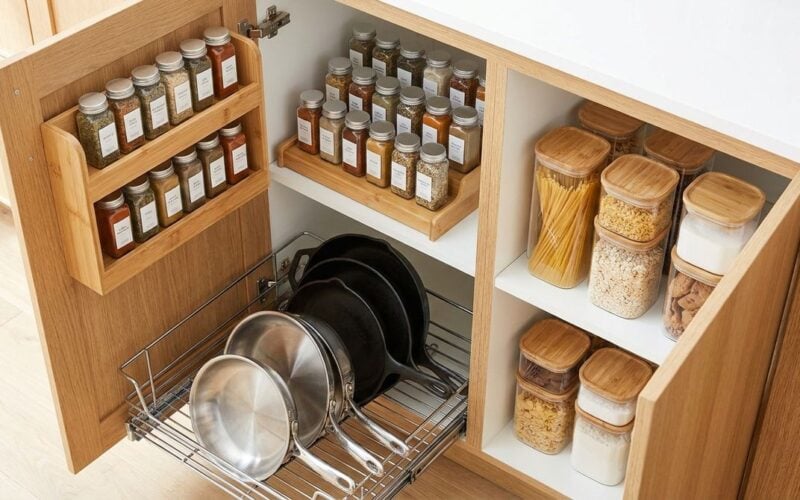
A central kitchen pantry also deserves attention during your spatial review, especially when parents need quick access to bulk staples without making frequent trips to the grocery store. Reviewing our guide on stocking a dependable home pantry will help you organize dry goods, infant snacks, and daily rations into easily visible, high-rotation zones. Implementing clear bins, step risers, and labeled shelf sections prevents expired baby food and duplicate grocery orders.
Group pantry inventory by daily routine rather than traditional supermarket categories. For instance, designate one accessible basket for rapid breakfast essentials, another for portable afternoon snacks, and a separate crate for weeknight dinner shortcuts. This practical arrangement allows any caregiver, partner, or visiting family member to locate items immediately without interrupting someone else for guidance.
Water management and dish drying also warrant systematic organization. Baby bottles, pump parts, and silicone cups require substantial drying space near the sink. Introducing compact vertical drying racks and designated washing bins prevents infant feeding gear from dominating the entire kitchen counter.
Structuring Service Packages and Gaining Clients
To turn your organizational skills into a thriving business, package your services into straightforward options. Clear project scopes help prospective clients understand exactly what assistance they will receive, which makes purchasing decisions far simpler for stressed families.
A practical way to structure your initial service menu is by household scope and project depth:
- Safety and Nursery Readiness Audit: A focused consultation covering furniture anchoring, safe crib placement, pathway clearance, and changing station ergonomics.
- Communal Living Room and Play Area Reset: A dedicated session centered on securing hazardous items, concealing wires, and establishing a tidy toy rotation layout.
- Complete Household Family Transition: A comprehensive multi-day project encompassing nursery organization, kitchen workflow setup, pantry inventory restructuring, and whole-house safety checks.
Marketing a home adaptation consultancy relies on establishing personal trust in your community. Rather than relying on broad digital advertising, connect directly with local professionals who already serve expectant families. Midwives, doulas, and prenatal fitness instructors regularly speak with parents preparing their homes for a newborn.
You can also partner with local family photographers and independent baby boutiques. Providing these partners with room checklists or offering brief educational talks at community centers positions you as a dependable resource for growing households.
By pairing practical child safety standards with logical storage arrangements, you deliver a service that immediately improves how a household operates every single day. As parents experience less friction during daily routines and enjoy a calmer living environment, their personal recommendations will build a solid reputation and steady client pipeline for your business.