MOXI vs. HALO: Which Laser Is Right for You?
Sun spots, uneven tone, rough texture, and fine lines can make skin look older than you feel. Laser skin resurfacing is one of the most effective ways to treat these concerns, and two names come up often: MOXI and HALO. Both are fractional lasers made by Sciton, but they differ in strength, downtime, and cost. This guide compares how each one works, who it suits, and what results you can expect.
How Each Laser Works
Fractional lasers treat tiny columns of skin while leaving the surrounding tissue intact. This helps skin heal faster and triggers new collagen.
MOXI
MOXI is a non-ablative fractional laser. It heats targeted areas below the surface without removing the top layer of skin. This gently breaks up pigment and refreshes texture. MOXI is often called a “prejuvenation” treatment because it works well as early maintenance.
HALO
HALO is a hybrid fractional laser. It combines two wavelengths in one treatment. The non-ablative wavelength works beneath the surface, while the ablative wavelength removes a thin layer of damaged skin. This dual action allows HALO to treat deeper concerns in fewer sessions.
Ideal Candidates
The right laser depends on your skin goals and how much recovery time you can manage.
Who MOXI Suits
MOXI works well for people with mild to moderate concerns, such as:
- Early sun damage and freckles
- Dull or uneven skin tone
- Mild texture issues
- Enlarged pores
It’s considered safe for a wider range of skin tones and can be performed year-round.
Who HALO Suits
HALO is better for moderate to advanced concerns, including:
- Deeper sun damage and age spots
- Fine lines and wrinkles
- Acne scars
- Noticeable texture irregularities
HALO is generally recommended for lighter to medium skin tones. A provider will evaluate your skin before treatment.
Treatment Experience
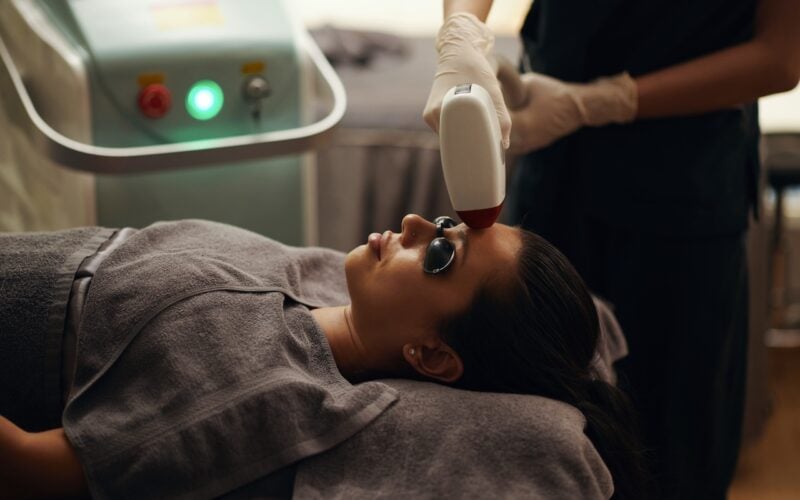
Both treatments start with a topical numbing cream. MOXI usually needs about 20 to 30 minutes of numbing, and the treatment itself takes around 15 to 20 minutes. Most patients describe a warm, prickly feeling.
HALO typically needs 45 to 60 minutes of numbing. The treatment lasts about 30 to 45 minutes and feels more intense because of the ablative component. Cooling devices help keep patients comfortable.
Downtime and Recovery
Downtime is often the deciding factor.
MOXI Recovery
Expect redness and mild swelling for one to three days. Skin may feel rough as tiny treated spots flake off. Many people return to work the next day.
HALO Recovery
HALO recovery usually takes five to seven days. Skin becomes red, swollen, and bronzed before peeling. Most patients plan a few days at home and must avoid sun exposure while healing.
Results
MOXI delivers gradual improvements in brightness, tone, and smoothness. Most patients benefit from a series of three to four sessions spaced about a month apart.
HALO produces more dramatic changes in a single session. Results continue to improve for several months as collagen builds. Some patients choose a second session for deeper concerns.
Cost Differences
MOXI usually costs between $500 and $1,200 per session. Because multiple sessions are common, a full series may total $1,500 to $4,000.
HALO typically ranges from $1,500 to $3,500 per session. While each visit costs more, fewer treatments are often needed. Prices vary by location, provider experience, and treatment area.
Which Laser Is Right for You?
MOXI and HALO both improve skin through fractional technology, but they serve different needs. MOXI is gentler, works for more skin tones, and has minimal downtime, making it a strong choice for early signs of aging and routine upkeep. HALO offers deeper resurfacing for sun damage, wrinkles, and scars, with a longer recovery period and higher per-session cost. Your skin type, goals, schedule, and budget all shape which laser fits you best.