
Why Tri-Merge Credit Reports Are So Important For Lenders
When it comes to pricing loans, an individual’s information is probably one of the most influential factors. For this reason, lenders have traditionally ordered as many reports as possible. This means ordering credit history from TransUnion, Equifax, and Experian. Then, after comprehensively reviewing a prospective borrower, lenders use the middle of the 3 credit scores to price the loan itself. This practice is called a tri-merge credit report, and it is the most reliable and accurate type of credit report.
However, some lenders have chosen to forego ordering from all 3 credit bureaus, and settle with simply 2. These bi-merge reports are often more accessible, but are they actually better for lenders? According to recent studies, it is estimated that around 18% of consumers have a credit score difference of 20 points or more when omitting one bureau’s data. While this may seem like a small difference, this means nearly 1 in every 5 applicants is being given the incorrect loan price when applying. This can also complicate loan eligibility. Right now, individuals who have a credit score of 700 or more are given more privileges in loan pricing. However, if a credit score is inflated by incorrect information, these privileges can be given to someone who is not necessarily eligible for them.
Ultimately, pricing a loan is a very careful endeavor. To ensure that everyone is getting the right price, omitting some data is simply not an option. Only by ordering tri-merge credit reports do lenders get the full story on their prospective borrowers.
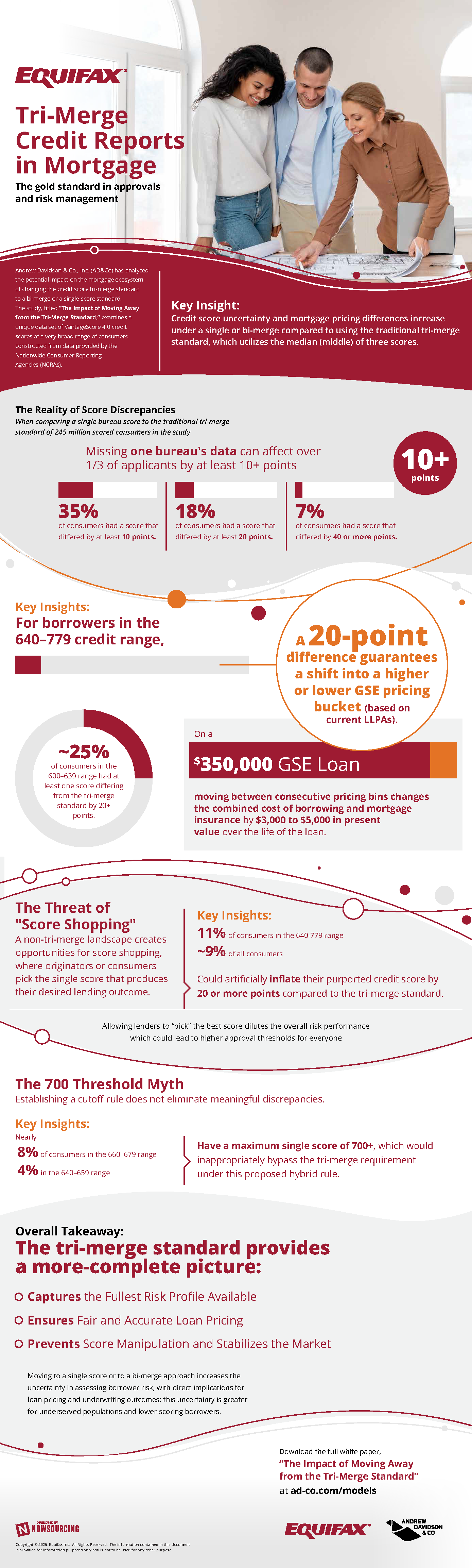
Source: Equifax